5 Warning Signs a Tree in Your Yard Has Become a Hazard
July 23, 2026
Quick Answer: A tree usually tells you it's failing before it drops a limb or comes down. The five signs worth watching are dead or hanging branches overhead, a worsening lean paired with lifting roots, deep cracks or cavities in the trunk, fungal conks and mushrooms near the base, and limbs crowding your roof or the power lines. One of these means keep a close eye on the tree. Two or more on the same trunk means it's time for a professional to take a look.
You walk past the trees in your yard every day, which is exactly why you stop really seeing them. Then a storm rolls through, a big limb lands across the driveway, and you're left wondering how long the warning was sitting there. Most hazardous trees give you a heads-up. The catch is that the signals are quiet, they creep in slowly, and a tree can hold a full green crown while the trunk or roots underneath it are quietly letting go. Knowing what to look for turns a vague worry into a clear call. Here are the five things we check first when we walk a property, and what each one is really telling you.
Sign 1: Dead or Hanging Limbs in the Canopy
Dead wood is the one defect arborists never bargain with. A living branch bends and flexes in the wind. A dead one is dry and brittle, and it can snap on a calm day for no obvious reason. That's why broken limbs hung up in a tree earned the old nickname "widow makers."
Bare branches that never leaf out
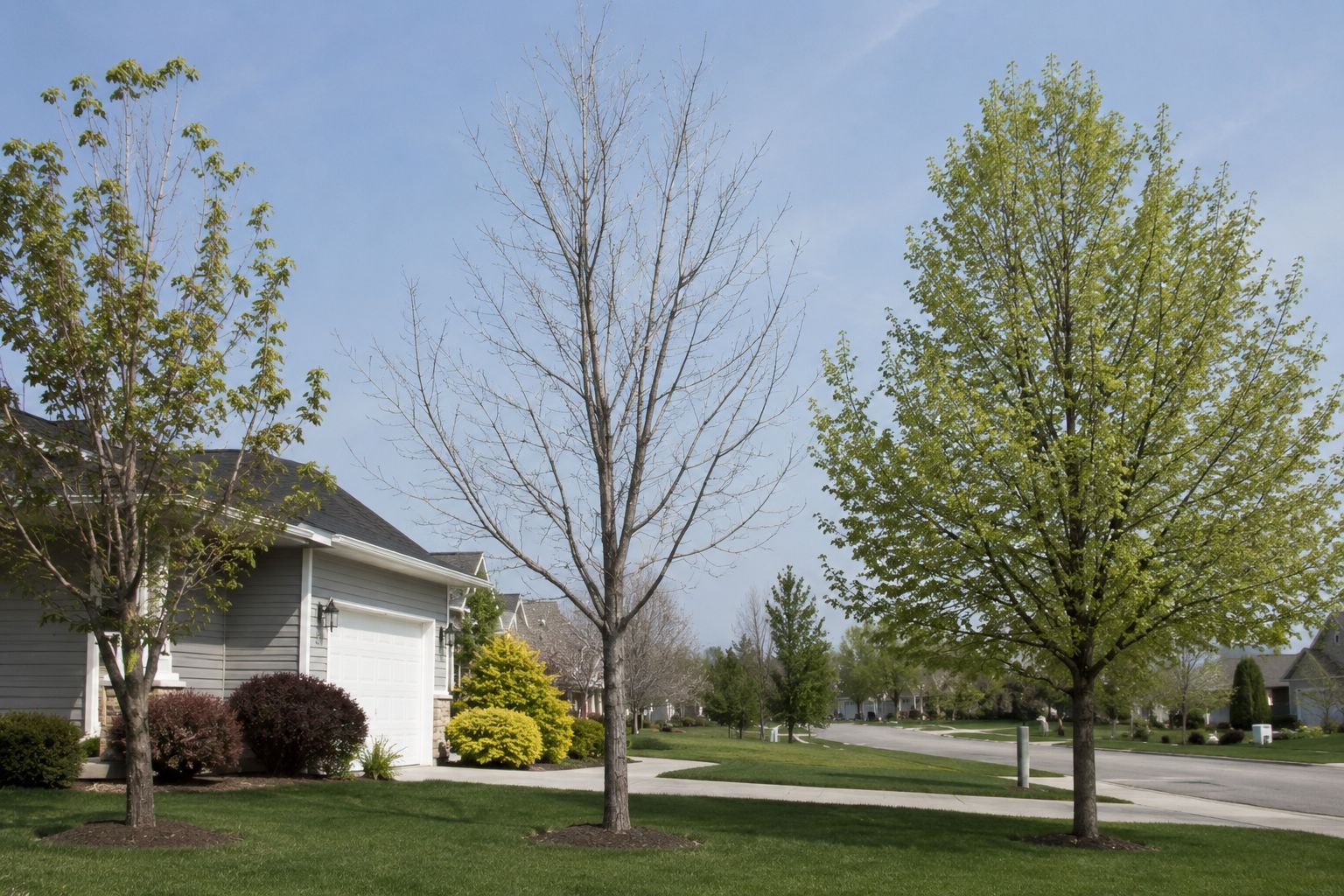
Late in spring, once everything else has filled in, scan the crown for limbs that stayed bare. Twigs with no buds, peeling bark, and no green under a scratched surface all point to dead wood. A few small dead twigs are normal on any mature tree. Large dead branches hanging over a spot you actually use are a different story.
Limbs already broken and caught up high
A branch that has snapped but lodged in the canopy is one of the most dangerous things in a yard, because it can drop at any moment. The bigger the hung limb and the more it has torn loose, the more it needs to come down now.
Whole sections that look thinner than the rest
When one part of the crown is sparse, off-color, or dropping leaves early while the rest looks full, that section is usually dying back. Grab a pair of binoculars and study it from the ground before you write it off.
TIP: Do your walk-around twice a year, once after the leaves drop in fall and again after everything leafs out in spring, then check again after any strong storm. A bare canopy makes dead wood and cracks far easier to spot than they are in the thick of July.
Sign 2: A Worsening Lean and Roots That Are Lifting
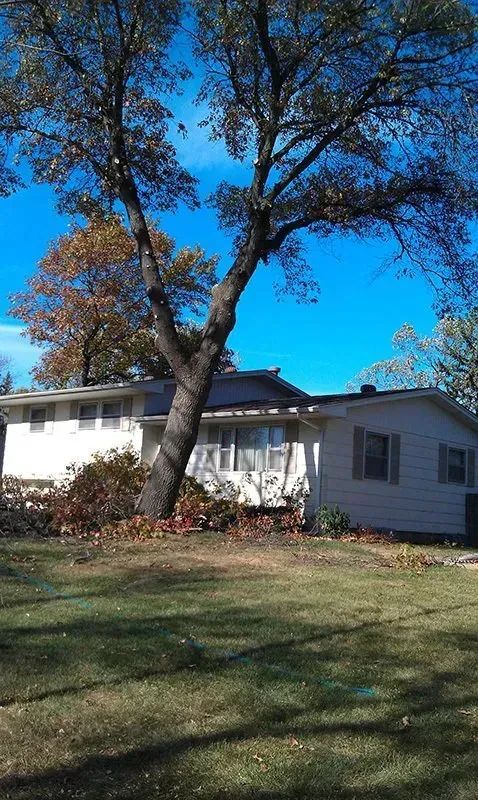
Not every leaning tree is a problem. Plenty of trees have grown at an angle their whole lives and stand just fine. What matters is a lean that's new or getting worse, especially when the ground around the base is reacting to it.
Fresh soil movement or a mound at the base
As a tree starts to tip, the root plate on the far side lifts and pushes up a low mound, or cracks the soil in an arc around the trunk. That mounding is a loud warning. It means the tree has recently begun to lean and could fail. Roots are the anchor, and once they lose their grip the whole thing can go over in a windstorm, or even on a still summer day under the weight of a full, wet canopy.
Exposed or heaving roots on one side
Roots pulled up out of the soil, or a gap opening between the trunk flare and the ground, tell you the anchor is slipping. Most root trouble happens underground and out of sight, so these clues above the surface are often the only warning you get.
A trunk that enters the ground like a fence post
A healthy trunk flares out where it meets the soil. When it drives straight into the ground with no flare, or the dirt looks disturbed on the leaning side, the root system may not be pulling its weight anymore.
Sign 3: Cracks, Cavities, and Decay in the Trunk
The trunk is the tree's support column, and defects here carry the highest stakes. A crack is a deep split through the bark and into the wood. It means the tree is already failing at that spot, not that it might someday.
Vertical splits and open seams
A crack running deep into the stem, two cracks in the same area, or a crack that meets up with another defect all point to a trunk losing its strength. Cracks that wrap across a branch or stem worry us most, because they cut straight through the wood fibers holding everything together.
Hollows, cavities, and soft, punky wood
Trees rot from the inside out, so a cavity or a patch of crumbly, spongy wood tells you the core may be far weaker than the outside lets on. Press a screwdriver into a suspect spot and if it sinks in easily, that's decay. A tree can wave a green crown while its center is going hollow.
Sunken or missing bark patches
A canker, where the bark is sunken or gone from an old wound or disease, weakens the trunk right there. One that wraps around a big share of the trunk can make the tree dangerous even when the exposed wood looks solid.
Sign 4: Fungus, Conks, and Mushrooms at the Base
Fungal growth is the clearest sign of decay you don't have to climb to find. It tells you rot is at work somewhere the wood should still be sound.
Shelf-like conks and brackets on the trunk
Hard, woody, shelf-shaped growths pushing out of the bark, the root flare, or a branch are the fruiting bodies of decay fungi. Wherever they show up, the wood inside is usually already breaking down.
Mushrooms in the root zone
Clusters of mushrooms rising from the soil right over the roots, or at the base of the trunk, often mean the roots or lower stem are rotting. That's the exact wood holding the tree upright, so decay there earns a hard look even when the crown still reads healthy.
Weeping sap, sawdust, or carpenter ants
Dark streaks of sap bleeding through the bark, piles of fine sawdust, or a steady line of large ants can all flag internal decay or insect activity a conk alone would miss. Not every rotting tree grows a mushroom, so these smaller tells matter.
Sign 5: Trouble Where the Tree Meets Your House or the Lines
A defect only becomes a hazard when something you care about sits within reach of it. Arborists call that a "target." Around a home the targets are your roof, your car, the people in the yard, and the utility lines.
Branches resting on the roof, siding, or gutters
Limbs that scrape or lie against the house grind away shingles and siding, trap moisture, and hand the biggest branches a straight path onto the roof if they let go. Growth crowding the structure is worth cutting back before it turns into something worse.
Limbs growing into or near power lines
Branches touching or reaching toward electrical service lines are both a fire risk and a shock risk. This is never a homeowner project. Not once.
A big, heavy tree leaning toward the house
When a mature tree carrying any of the defects above is also aimed so a failure lands on your home, the driveway, or a play area, the room to wait shrinks fast. That combination shoots a tree straight to the top of the list.
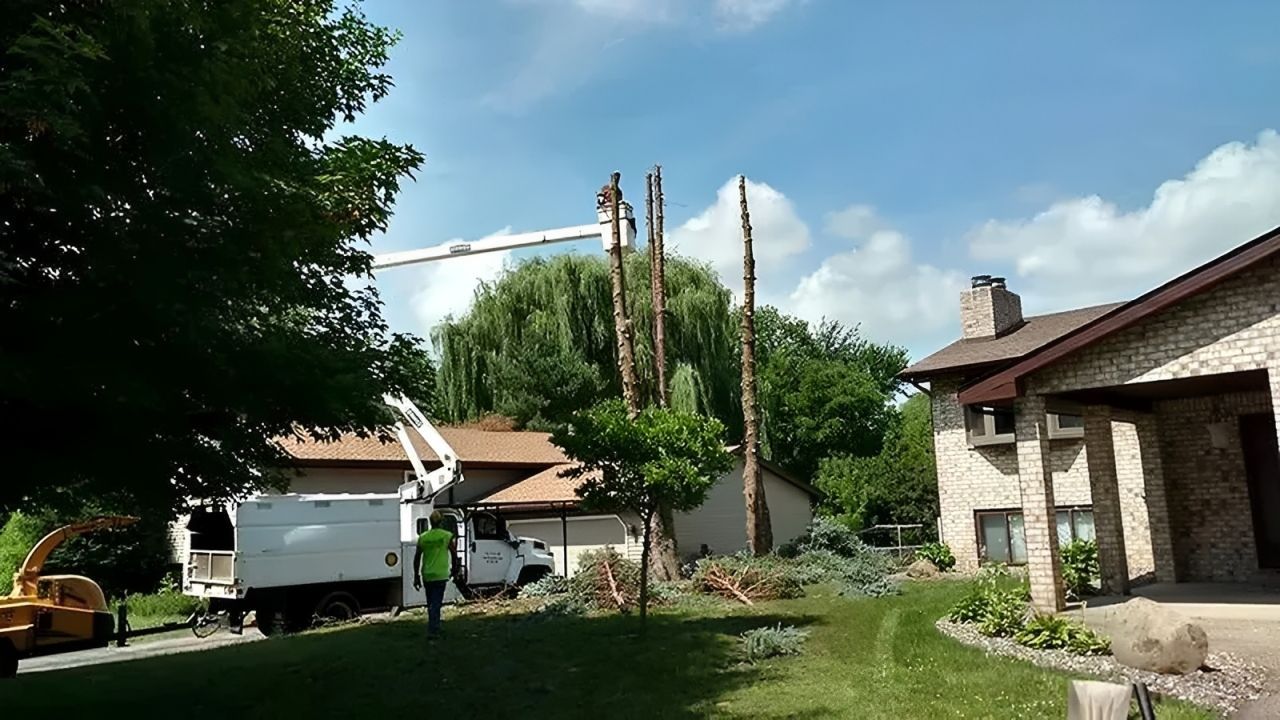
WARNING: Removing or cutting back a hazardous tree, especially one near a structure or power line, is dangerous work in the real sense of the word. Compromised trees behave in ways you can't predict once cutting starts, energized lines can kill, and a section of trunk that looks manageable from the ground often weighs far more than it appears. This isn't a DIY job or a task for a general handyman. Hazardous tree removal should always go to trained, insured, and properly equipped arborists who can read the lean, the load, and the surroundings before a single cut is made.
When to Call an Arborist and When to Just Monitor
Not every flaw means a tree has to go. The call comes down to how bad the defect is, whether it sits on the main stem, and what's standing underneath it.
Fine to monitor
A few small dead twigs, a bit of deadwood well clear of anything you use, a long-standing lean with no fresh soil movement, or minor surface bark scrapes can usually be watched. Keep an eye on them, note any change, and fold them into your seasonal walk-around.
Time to call a pro
Bring in a certified arborist when you see a crack running deep into the trunk, a cavity or advanced decay, conks or mushrooms at the base, a lean paired with heaving or mounding soil, large dead limbs over the house or driveway, or any branch near a power line. Several defects on the same trunk should be treated as serious. Anything you're unsure about is worth trained eyes. A good arborist can tell the difference between a tree that needs a few pruning cuts and one that has to come out, and that read is the whole reason you catch these signs early.
Frequently Asked Questions
Can a tree look healthy and still be dangerous?
Yes. A tree can carry a full, green crown while its trunk or roots are badly compromised. Green leaves confirm the plumbing works, not that the structure is sound; decay and cracks hide behind it.
Is a leaning tree always a hazard?
No. Many trees have grown at an angle for years and stand perfectly stable. The concern is a lean that's new or worsening, with fresh soil movement, mounding, or lifting roots on the high side.
How often should I check my trees?
Twice a year plus after storms is a good rhythm. Check after leaves drop in fall and again when they fill in during spring, since bare branches make cracks and dead wood easier to spot.
Do mushrooms at the base of my tree mean it's dying?
Mushrooms or shelf-like conks near the base are a serious warning; they usually signal decay in the roots or lower trunk, the wood holding the tree upright. It doesn't guarantee failure, but warrants professional evaluation.
Why can't I just remove a hazardous tree myself?
Compromised trees behave unpredictably once cutting starts, and their weight, height, and stored tension are easy to underestimate. Add a nearby house or power line and risk climbs fast, so removal belongs with trained professionals.
What's the difference between pruning the problem and removing the tree?
Sometimes the hazard is a single bad branch on a sound tree, and pruning settles it. Removal is a last resort, used when defects sit on the main stem or roots can no longer hold.
Reading Your Yard With Clear Eyes
None of this turns you into a tree expert. It just asks you to look up, look at the base, and notice change. Dead limbs overhead, a lean that's drifting, a split or hollow in the trunk, fungus at the roots, or branches crowding the house and the lines are the language a tree uses to say it's in trouble. Catch one and you've got time to plan. Catch two on the same trunk and the tree is asking for a second opinion sooner rather than later. The people who dodge the worst surprises are usually just the ones who looked a season or two before they had to.
Schedule a
hazard tree assessment
— have a certified arborist walk your property and give you a clear read on any tree you are worried about. Based in Maple Plain, Minnesota, with over 25
years of experience, TWIN PINES TREE CARE & LANDSCAPING
can help you tell the difference between a tree to watch and one that needs to come down.