Dead Tree or Just Dormant? How to Tell Before Winter Ends
August 30, 2026
Quick Answer:
A tree that looks lifeless in late winter is usually still dormant, not dead. The surest way to check is the scratch test: nick a small patch of bark on a pencil-width twig with a fingernail or pocketknife. Green, moist tissue underneath means the tree is alive and simply conserving energy through the cold months. Dry, brown tissue underneath, branches that snap instead of bend, and buds that are shriveled or missing altogether are the signals that something has actually died. Bark peeling away in sheets, mushrooms growing at the base of the trunk, or a sudden lean in the root zone point past ordinary winter stress and toward a tree that needs a professional look before the ground fully thaws.
Why This Question Gets Harder Every Late Winter
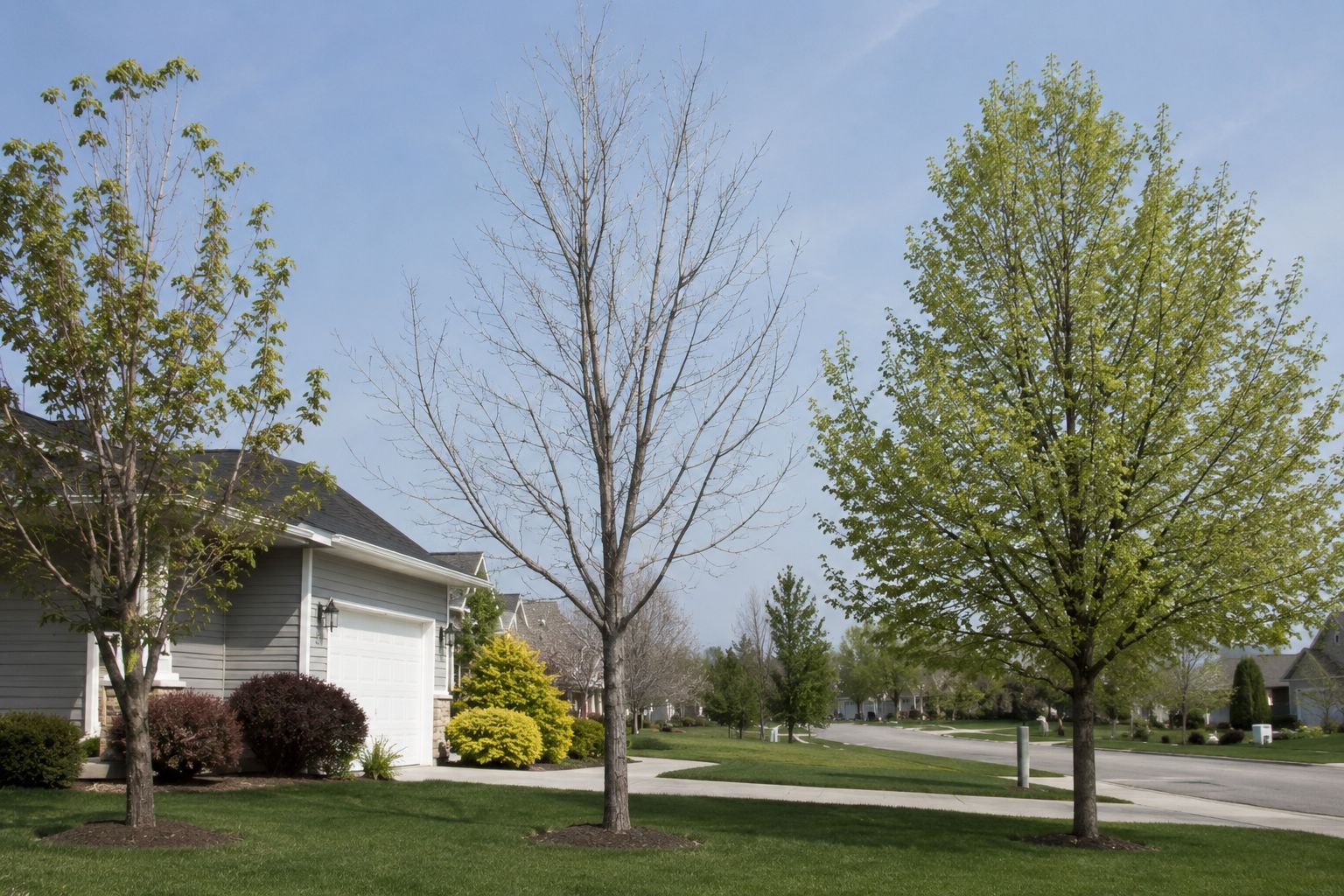
By February and March, every tree in a Minnesota yard looks roughly the same: bare, gray, and still. Deciduous trees drop their leaves months earlier as a survival move, redirecting whatever energy remains toward the roots and trunk instead of maintaining foliage that would only freeze and die anyway. That strategy works well against the region's cold snaps, but it also erases most of the visual cues homeowners rely on the rest of the year to judge tree health. Bark color, canopy fullness, and leaf condition all disappear, leaving a silhouette that can belong equally to a tree that will leaf out in six weeks or one that quietly died back in November.
The cold itself does real damage here, which muddies the picture further. Roots on most species growing in this climate can be killed outright once soil temperatures drop to somewhere between zero and ten degrees Fahrenheit, and that threshold gets reached more often when snow cover is thin, since snow acts as an insulating blanket over the root zone. A tree that lost part of its root system to a low-snow winter can look identical, from the driveway, to one that is simply resting. Sorting out which situation you're actually looking at takes more than a glance out the window. It takes a handful of physical checks that don't depend on the season cooperating.
Start Low, Not High
Before testing any branches, look at the base of the trunk and the surrounding soil. Roots and lower trunk tissue frequently stay alive even when upper branches have died back from cold, storm damage, or disease, so a tree that appears finished at the crown can still be very much alive lower down. Working from the bottom up gives a more accurate read than starting at the highest, most exposed branches, which are also the ones most likely to have sustained winter injury regardless of the tree's overall condition.
The Scratch Test: Your First Line of Evidence
The scratch test remains the fastest, most reliable field check available to a homeowner without any tools beyond a fingernail or a small knife. Choose a branch roughly the diameter of a pencil, then gently scrape away a sliver of the outer bark to expose the layer underneath, known as the cambium. Green and slightly moist tissue confirms that section of the tree is alive and actively capable of growth once temperatures rise. Tissue that comes up dry, brown, or crumbly indicates that particular branch has died, though it doesn't necessarily mean the whole tree has.
Run this test on two or three branches in different parts of the canopy rather than relying on a single spot. Even a perfectly healthy tree can carry a few dead twigs after a hard winter, storm damage, or minor pest activity, so one brown result surrounded by several green ones usually just means normal pruning is in order, not tree removal. If every branch you check comes back dry regardless of location or height, that pattern is far more telling than any single test.
Bend, Don't Break: Reading Branch Flexibility
Pair the scratch test with a simple flex check. Take hold of a smaller branch, no thicker than a finger, and bend it gently between your hands. Living wood, even in the dead of winter, retains enough moisture and flexibility to bend without breaking. Dead wood has dried out internally and will typically snap cleanly with an audible crack, feeling brittle rather than springy.
This test works well as a quick cross-check against the scratch test because the two rely on slightly different physical properties (moisture content versus tissue color), and agreement between them gives you more confidence in the result. As with the scratch test, check multiple branches across the canopy rather than drawing a conclusion from one snapped twig, since isolated dead branches are common and don't reflect the health of the tree as a whole.
What Healthy Buds Look Like
Dormant trees don't sit completely inert through the cold months. Most species set next season's buds the previous growing season, and those buds remain visible at branch tips throughout winter, waiting for the right combination of warmth and daylight to swell and open. A healthy bud is typically firm to the touch, rounded, and symmetrical, sitting close against the twig rather than curling or peeling away from it.
Buds that look shriveled, dried out, or are simply absent from where they should be growing are a meaningful stress signal, though not necessarily a death sentence on their own. Cold-injured flower buds are actually more common than cold-injured leaf or stem buds, since flower tissue tends to be less hardy against sudden temperature swings. This shows up clearly in flowering shrubs, where the lower buds that stayed insulated under snow survive while the exposed upper buds don't. A tree can lose a season's worth of flowers or a portion of its buds to a hard winter and still leaf out normally everywhere else once growth resumes.
TIP: Photograph a few marked branches in late winter, then check the same spots again in six to eight weeks. Side-by-side comparison removes the guesswork of memory and makes bud swell, or the lack of it, much easier to confirm than trying to recall what a branch looked like a month earlier.
Reading the Bark and the Base
Some signs point away from ordinary dormancy and toward genuine decline, and they tend to show up on the trunk and root flare rather than on individual branches. Bark that is peeling away in large sheets, splitting down to bare wood, or sloughing off to reveal dry, discolored wood underneath usually reflects something more serious than winter rest — often environmental stress, internal decay, or rot that has been progressing for a while. A related but distinct pattern shows up on thin-barked species like maple, linden, honeylocust, crabapple, and mountain ash: elongated, sunken patches of dead bark on the south or southwest side of the trunk, caused by winter sun warming the bark during the day and then a sudden temperature drop refreezing and killing that active tissue. This kind of localized winter injury can look alarming but often affects only one side of the trunk rather than signaling that the whole tree is compromised.
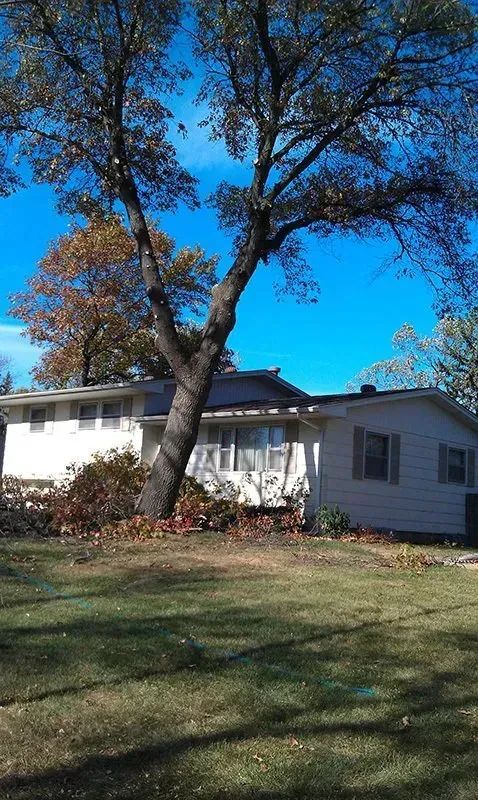
Fungal growth is a different story and deserves closer attention. Mushrooms or shelf-like fungal growth at the base of the trunk or along exposed roots are a strong indicator of internal decay, since these organisms feed on dead or dying wood tissue rather than living tissue. A tree can look structurally normal above ground while decay is well established in the roots or lower trunk underneath. Combine that with a trunk that has started leaning in a new direction, soil that looks heaved or cracked around the base, or roots that have become visibly exposed, and you're looking at a structural concern rather than a seasonal one — the kind of situation where a physical assessment matters more than another round of the scratch test.
Why Late Leaf-Out Doesn't Always Mean Trouble
Once the growing season actually starts, a new source of anxiety sets in: neighboring trees are fully leafed out and yours still looks bare. Before assuming the worst, it helps to know that species vary considerably in how early they break dormancy, and some, oaks among them, are reliably slower to leaf out than maples or lindens planted nearby. Comparing your tree only to others of the exact same species growing in similar conditions gives a far more accurate benchmark than comparing it to the whole yard.
Delayed leaf-out can also follow a stressful prior season. Drought, a late spring frost, transplant shock, or root disturbance from construction or grading work can all push a tree's recovery timeline back without permanently damaging it. As long as the scratch test still turns up green tissue, particularly lower on the trunk and main branches, there's usually still time for growth to catch up. Trees that show no bud activity and fail both the scratch and flex tests by the time surrounding trees of the same species are fully leafed out are a different matter, and at that point continued waiting rarely changes the outcome.
WARNING: A tree with a fresh lean, cracked or heaved soil at the root flare, or large fungal growth at the base should be treated as a possible structural hazard rather than a wait-and-see case, even if some branches still pass the scratch test. Root and trunk failures can happen with little additional warning, and a tree in that condition sitting near a house, driveway, deck, or power line is worth having assessed promptly rather than monitored through another storm season.
Factoring In What the Winter Actually Did
Minnesota winters bring more than cold air, and it's worth considering what else the season may have thrown at a given tree before assuming dormancy explains everything. Heavy snow and ice loads bend and break branches outright, and trees with multiple trunks or narrow, included branch unions — river birch and similar clump-form species in particular — tend to take the brunt of that damage. De-icing salt used on nearby driveways and sidewalks can also work its way into the root zone through runoff and splash, showing up later as scorched-looking foliage or dieback concentrated on the side of the tree closest to the treated surface, which can be mistaken for disease when the real cause is chemical stress in the soil. None of these factors change how you run the scratch or flex test, but they help explain why one tree in the yard looks rougher than its neighbors even though both are the same species and the same age.
When a Professional Assessment Makes Sense
Homeowner-level testing answers the dormant-versus-dead question correctly most of the time, but a handful of situations call for a trained eye instead of another scratch test. Trees where the results are mixed — green tissue in some spots, dry in others, buds present on some branches but absent on others — benefit from someone who diagnoses tree stress for a living and can weigh those inconsistent signals against species, age, site history, and the specific pattern of damage. The same goes for any tree showing the structural red flags described above: significant lean, root heaving, large decay pockets, or trunk cracking. An arborist walking the property can check root flare condition, probe for internal decay, and evaluate whether a tree that's alive is still safe to keep in place, which is a separate question from whether it's alive at all.
Frequently Asked Questions
How long should I wait before assuming a tree is dead?
Wait several weeks beyond when other trees of the same species nearby have fully leafed out. Different species break dormancy at different times, so compare your tree with similar trees.
Can a tree be partly dead and partly alive?
Yes. Winter damage, storms, drought, or disease can kill individual branches while leaving the rest healthy. Test branches throughout the canopy to determine whether damage is localized or affecting most of the tree.
Does a tree that lost its flowers but still has leaf buds need attention?
Not necessarily. Flower buds are often more vulnerable to freezing temperatures than leaf buds. A tree may lose its blooms after severe winter weather while remaining healthy and capable of normal spring growth.
Is mushroom growth at the base always a sign of a dying tree?
Mushrooms often indicate decay in the roots or lower trunk, but they do not automatically mean the entire tree is dead. Their presence warrants professional evaluation because decay can weaken structural stability.
What if the scratch test looks different at different heights?
Different results can indicate localized winter injury. Upper branches often suffer first because they are more exposed, while lower sections remain alive. Green tissue below and dead upper branches may indicate selective pruning.
Knowing When Winter Dormancy Ends
A late-winter tree can look completely lifeless while still holding healthy, living tissue beneath its bark. Checking several branches with the scratch and flex tests, observing the condition of buds, and inspecting the trunk and root flare can reveal whether the tree is simply waiting for warmer conditions or experiencing genuine decline. Looking at these signs together is more reliable than judging a bare canopy alone, especially after Minnesota’s snow, ice, temperature swings, and winter stress.
For homeowners in Maple Plain and the Twin Cities Metro, seasonal uncertainty is easier to manage with a careful, patient assessment. TWIN PINES TREE CARE & LANDSCAPING, serving Maple Plain, MN, brings 25+ years of experience to evaluating
tree health and winter damage. Understanding what your tree is showing now can help distinguish normal dormancy from problems that may require pruning, monitoring, or further evaluation once spring growth begins.