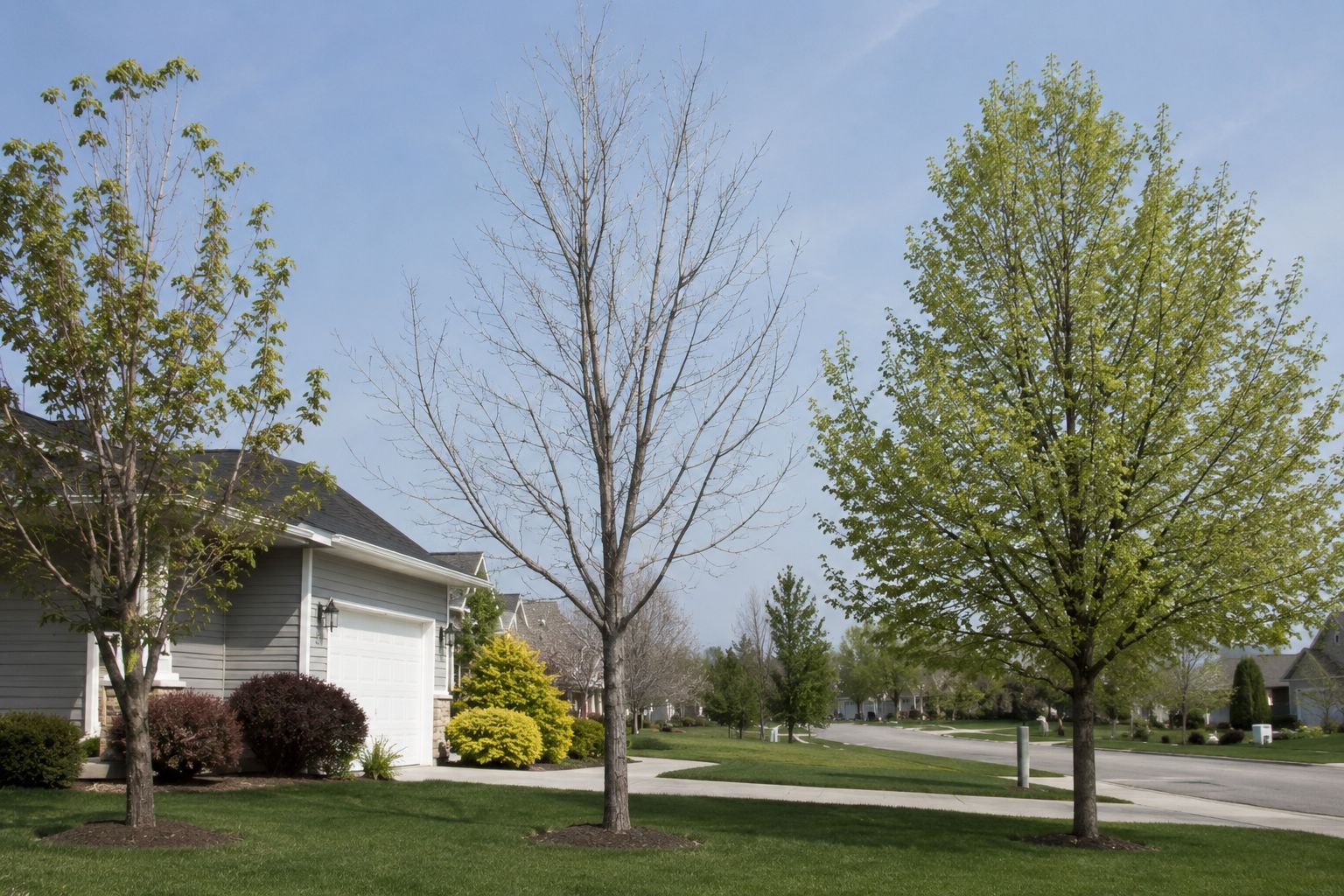
How Pros Safely Remove a Tree Close to a House or Power Line
September 14, 2026
Quick Answer: Removing a tree near house walls, roofs, or power lines is never a straight-down felling job. Crews start with a hazard assessment that maps lean, decay, root condition, and every wire or structure within reach of the canopy, then build a rigging plan around it. Most of the tree comes down in controlled pieces — lowered on ropes through friction devices or lifted out whole with a crane — rather than dropped in one motion. Any work within roughly ten feet of an energized line stops until a line-clearance qualified arborist takes over or the utility confirms the line is protected. The result, done right, is a cleared site with the house, the fence, and the neighbor's garden exactly where they started.
A tree that's grown up eight feet from a bedroom window doesn't behave like one standing alone in a field. Every limb has a direction it wants to fall, and near a house or a power line, half of those directions end in a broken window, a crushed gutter, or a dead short. You've probably watched a crew work on a tree like this and wondered why it takes half a day to bring down something a chainsaw could drop in ten minutes in open ground. The answer is that almost none of that time goes to cutting. It goes to controlling exactly where each piece lands.
This is what that process actually looks like, step by step, and why the pace that feels slow from the sidewalk is the whole point.
Reading the Tree Before Anyone Touches a Saw
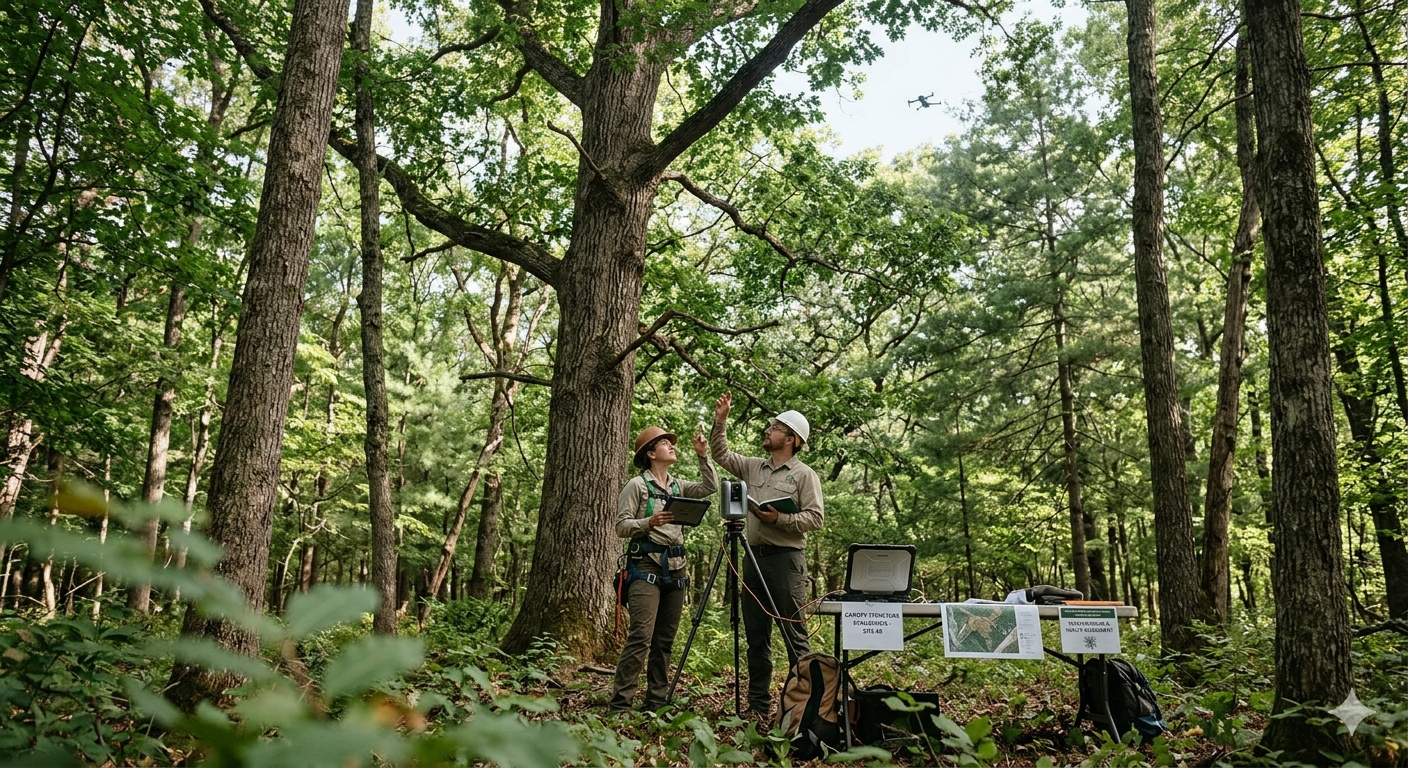
The first hour on a tree like this rarely involves a chainsaw at all. A climber or crew lead walks the base, looks up through the canopy, and starts building a mental map of every hazard the tree presents and every target it could hit on the way down.
Lean And Root Condition
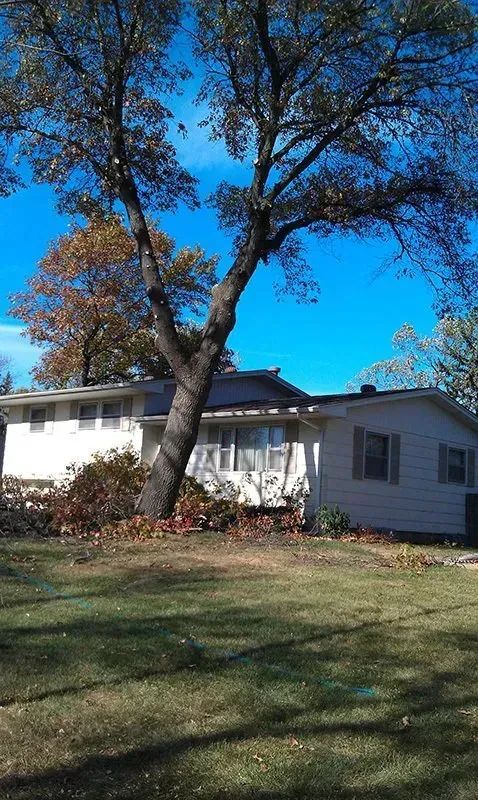
A tree leaning toward the house changes everything about cutting, while a heaved or cracked root flare may indicate failure; crews assess soil movement carefully before cutting.
Decay And Structural Defects
Soft spots, unclosed pruning wounds, cavities, and included bark where major limbs meet tightly can change how much weight a section safely carries during rigging and lowering.
Targets In The Drop Zone
The house is one target, but detached garages, fences, decks, vehicles, and every nearby wire also matter when crews evaluate the potential drop zone and hazards nearby.
Access And Escape Routes
Equipment parking and climber escape routes are planned before cutting begins, ensuring access remains workable and retreat options are available if a limb behaves unexpectedly during removal.
Everything from this walk-around feeds directly into the plan that follows. Skip it, and every decision after this point is a guess.
Building the Rigging Plan Around What's Actually There
Once the hazards are mapped, the crew works out how weight is going to move — because on a tree this close to a structure, almost nothing gets cut free and dropped. It gets lowered.
Rigging, in plain terms, is a system of ropes and friction devices that let a crew control the speed and direction of a piece of wood as it comes off the tree, instead of letting gravity decide. A rigging line runs from the piece being cut, up through a block or a strong natural crotch higher in the tree, and down to a friction device — often a port-a-wrap wrapped around the trunk — where a ground person feeds rope out at a controlled rate. Cut a limb free with that system in place and it swings on the rope instead of falling straight down, landing exactly where the ground crew wants it instead of wherever the wind and the branch's own weight happen to send it.
The plan gets specific about anchor points, too. A rigging point too low on the trunk gives a piece too much swing before the rope catches; too high, and the load on that anchor point can exceed what the wood can safely hold. Getting this wrong is how limbs end up through a roof instead of on the tarp where they belong. A tag line — a second, lighter rope a ground worker holds — often gets added just to steer a piece a few extra feet clear of a window or a flower bed on its way down.
Choosing Between Directional Felling and Piece-by-Piece Removal
Open-field tree work usually comes down in one piece, using directional felling: a notch cut on the side the tree should fall toward, followed by a back cut that leaves a strip of connected wood — the hinge — to steer the trunk as it goes over. It's fast, and when there's forty feet of open lawn to work with, it's the obvious choice.
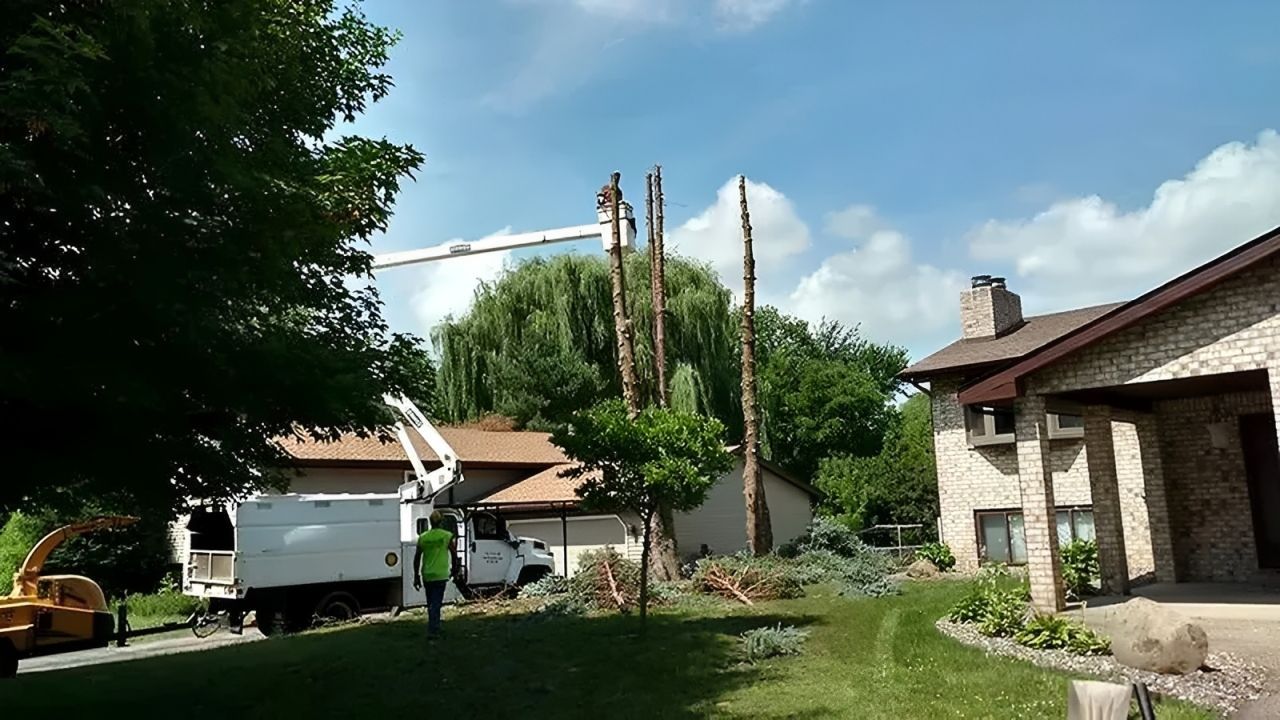
Near a house or a line, directional felling is often off the table entirely, because there's no safe direction to point a whole tree. That's when the job shifts to piece-by-piece dismantling. A climber, or a bucket operator working from an aerial lift, works from the top down, removing the canopy in manageable sections, then breaking the trunk itself into rounds short enough to control on the way down. Each piece gets rigged, cut, and lowered before the next one starts. It's slower — sometimes by hours — but it means the tree never has a moment where its full weight is in motion and uncontrolled.
The choice between the two isn't a preference. It's decided by the target zone identified in the hazard walk-around, the tree's lean, and how much clean fall path actually exists once the house, the garage, and any wires are accounted for.
When a Crane Takes Over the Heavy Lifting
Some trees are too large, too rotten, or too close to a structure to trust to rigging alone, and that's when a crane enters the picture. Instead of a climber cutting a piece free and letting the rigging system absorb the swing, the crane's cable takes the weight directly. The operator and the ground crew agree on a lift plan before the first cut — where each piece goes, how the crane's boom will swing clear of the house and any wires, and what the weight limit is for a given reach and angle.
A crane pick changes the physics of the whole operation. A section gets cut free while already under tension from the crane line, so there's no drop, no swing, and no moment where an uncontrolled load is loose in the air. That control comes at the cost of setup time and space — a crane needs a stable pad to sit on and enough clearance to swing its boom, which isn't always available on a tight urban or suburban lot. Where it fits, though, it's often the safest option for a tree standing directly over a roofline or growing through a service line.
Coordinating Around a Line That's Still Live
A power line running through or near a canopy changes the whole approach, and it starts well before anyone climbs. Industry safety practice puts a firm buffer — commonly ten feet — around any conductor that hasn't been confirmed dead, and every wire gets treated as energized until a utility representative or a qualified line-clearance arborist says otherwise. Wood conducts electricity better than most people assume, especially wet wood, so a branch resting against a line, or a rigging rope that brushes one, can carry current straight back to the crew.
For work that has to happen inside that buffer — a limb actually overhanging a service line, say — the job either goes to a crew member trained and equipped specifically for line-clearance work, or the utility gets called ahead of time to de-energize or temporarily protect the line. That coordination step is about physics, not paperwork: a downed or damaged service drop can also cut power to the house it's supposed to be feeding, so the homeowner usually hears about this step before it happens. On a job with a house drop running through the canopy, this conversation happens during the planning walk-around, not after a saw is already running.
TIP: If a tree on your property has any branch resting on or crossing a power line, don't wait for a routine trim to deal with it. Contact a tree service and mention the line specifically when you call, so the crew can plan for utility coordination before they show up rather than discovering it on site.
Cleanup and Leaving the Site Usable
Once the tree is down, the work isn't finished. Debris — brush, limb sections, and trunk rounds — gets processed on site, usually chipped or bucked into rounds and hauled out, so the yard isn't left buried in material. Rigging gear, ropes, and any protective plywood or padding laid down to protect a lawn, patio, or driveway during the pick comes up last, after the crew does a final walk of the drop zone checking for anything that might have been missed — a stray branch tip in the gutter, rope burn on a fence rail, compacted turf where a crane pad sat.
A stump usually remains at this point unless grinding was part of the scope, and the crew generally rakes and levels the immediate area so the yard is safe to walk across rather than left as a hazard in its own right.
Why Homeowners Shouldn't Attempt This Themselves
A tree standing near a structure or a line combines several serious hazards at once: fall risk from working at height, struck-by risk from moving wood, and electrical risk if any part of the tree or the equipment touches a live wire. Each of those is dangerous on its own. Together, and compressed into a yard where a mistake can also total a roof or a garage, they're the reason this work goes to trained crews with the right rigging equipment, not a homeowner with a chainsaw and a ladder.
The rigging systems described above take real training to run safely — misjudging a hinge cut, an anchor point, or a lowering speed can send a load somewhere nobody planned for. And a wire that looks dead from the ground often isn't. Struck-by and fall injuries remain among the leading causes of serious injury in tree work generally, and both risks go up, not down, when a house or a power line sits within reach of the canopy.
WARNING: Never assume a power line is dead because the power is out inside the house, and never touch a tree limb that's resting on any line. Contact between a wet branch and an energized conductor can carry current through the whole tree, into the ground, and into anything touching either one. If a storm has dropped a limb onto a line on your property, stay well back and treat the whole tree as electrically live until the utility says otherwise.
Frequently Asked Questions
How close to a house does a tree need to be before it changes the removal method?
There's no fixed distance. It depends on the tree's height, lean, and fall path. As a guideline, if height nears or exceeds distance to the house, piece-by-piece removal takes over.
Can a tree be removed if a power line runs through the branches?
Yes, but the approach changes. Work inside the line's safety buffer goes to a line-clearance qualified arborist, or waits until the utility de-energizes or protects it. The rest uses rigging.
Does the house need to be empty during a removal like this?
Not usually, though crews ask everyone to stay clear of the drop zone during cuts. Jobs where a crane swings pieces over the roofline may call for wider clearance briefly.
What happens if a piece of the tree is already resting on the roof or a line?
That changes the order of operations. The crew stabilizes or removes the resting piece first, under controlled rigging, before touching the rest, since contact with a structure can shift unexpectedly.
How long does a removal near a structure usually take compared to an open-field removal?
It varies with tree size and how much rigging or crane work is involved. Piece-by-piece work near a house takes several times longer than a directional fell in open ground.
Will removing a tree near my house damage my lawn or driveway?
Some ground impact is normal, especially where a crane pad sits or heavy sections land repeatedly. Crews typically use plywood or mats to protect turf, patios, and driveways during cleanup.
The Difference Between a Cut and a Plan
Every removal near a house or a power line comes down to the same trade: patience for control. The tree that takes all afternoon to come down eight feet from your siding isn't slow because the crew enjoys waiting. It's slow because every piece has somewhere specific to land, and getting that wrong isn't an option when a roof or a live wire sits within reach of the canopy. What looks unhurried from the sidewalk is simply the only way to do this job right.
That same principle guides how TWIN PINES TREE CARE & LANDSCAPING
approaches every tree standing over a roofline or a service line in Maple Plain, MN. With 25+ years spent reading lean, decay, and root condition before a single cut is made, the goal on every job is the same: bring the tree down piece by piece, rope by rope, until the yard looks exactly as it did before the crew arrived, minus the risk that brought them there in the first place.